Is…
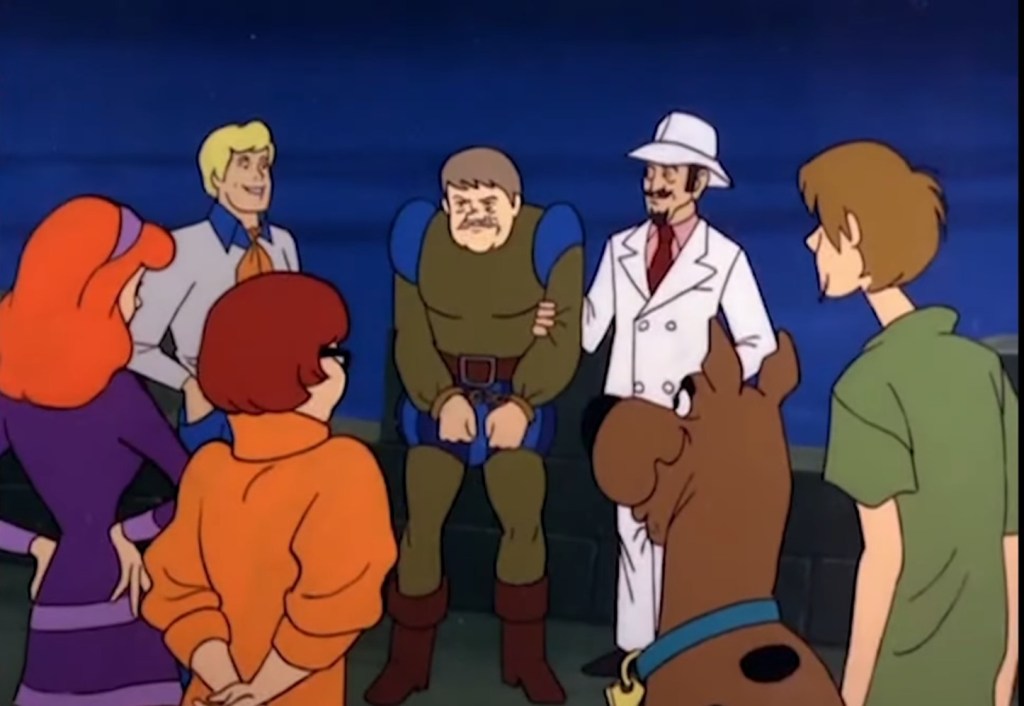
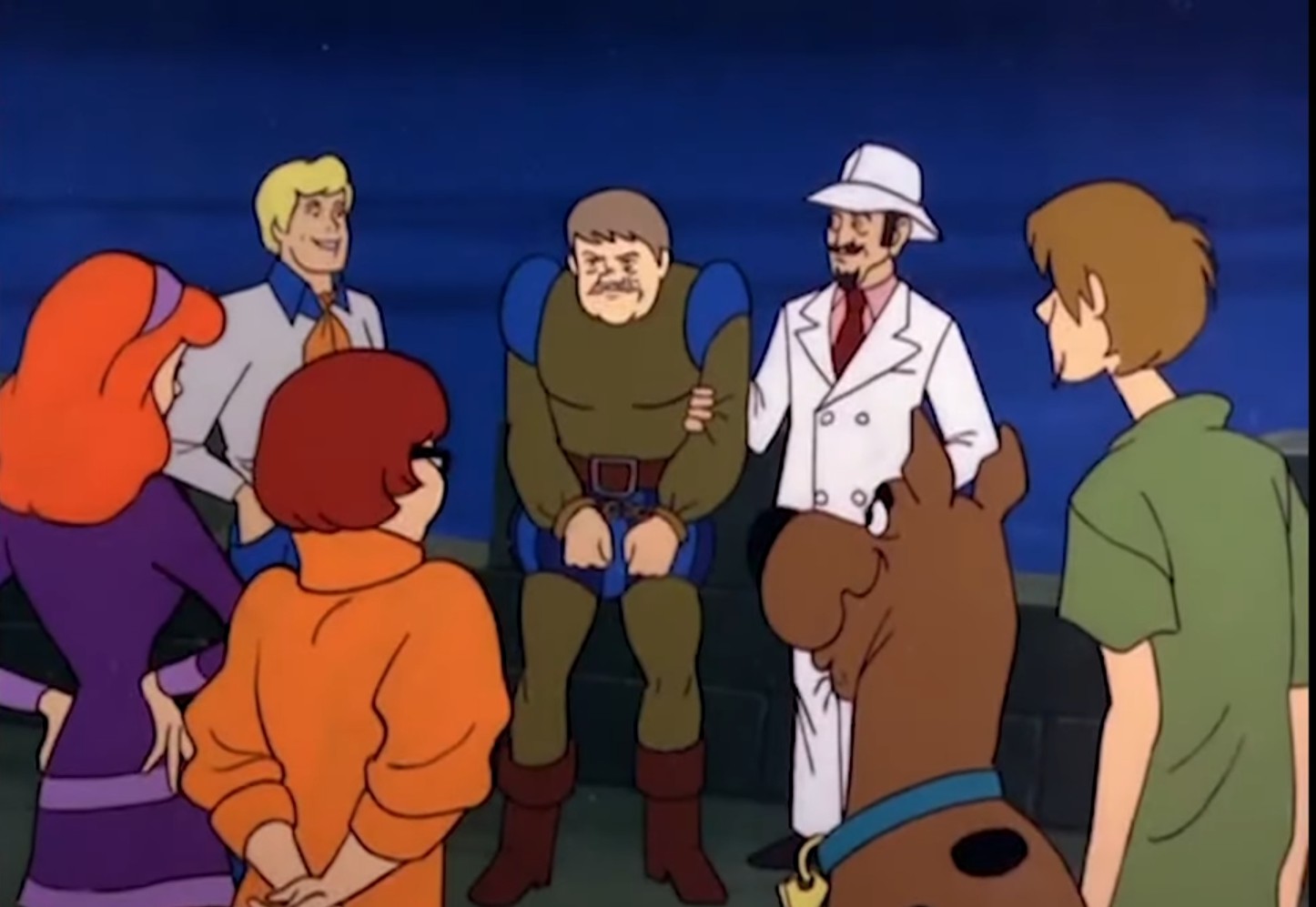
the one that was always uttered at the end of every episode of Scooby Doo when the villain was unmasked and turned out to be the unlikeliest of suspects. Scooby, Shaggy, Fred, Daphne and Velma would be astounded when the mask (there was always a mask) was removed and then the villain would say:
«And I would have gotten away with it if it hadn’t been for you meddling kids»
This sentence has it all: a third conditional, a phrasal verb, a bit of American English and a fancy C2 adjective.
- The third conditional is formed with if + past perfect (if it hadn’t been for..) + would have + past participle (I would have gotten ..) Obviously, the order of the two clauses can be changed around.
- The phrasal verb ‘get away with’ means that you’re not caught or punished for doing something wrong.
- American English sometimes does away with* some of the irregularity of the language: forget, forgot, forgotten so get, got, gotten rather than the get, got, got of British English.
- If you meddle, you interfere in something that isn’t your concern. And that’s how the unmasked villains always saw Scooby and the kids
The classic quote is the one above, but here are some variations on that.
These variations also highlight some differences in the grammar of conditionals. Thwarted villain number four says «I might have gotten away with it if it wasn’t for these blasted kids and their dog.» Here ‘might’ replaces ‘would’ and so a possibility of getting away with it replaces the certainty of doing so. The second clause is that of a second conditional, meaning that the whole sentence is a mixed conditional: the present (not past) result of an imaginary past situation.
The word ‘cartoon’ comes from preliminary drawings for paintings etc. on ‘strong paper’, from the Italian ‘cartone’, so just like Spanish ‘carton’. Pretty cool, yeah?
And if we’re talking about cool stuff, then we can’t ignore the theme songs from all our favourite cartoons, can we?
Like this!
But for cartoons, childhood wouldn’t be half as much fun. And but for Scooby Doo and those meddling kids, all those villains would’ve got away with their evil plans. And but for ‘but for’, you wouldn’t have this great way to impress people with your English. It means ‘if it wasn’t/weren’t for’ as in the first example and ‘if it hadn’t been for’ as in the second.
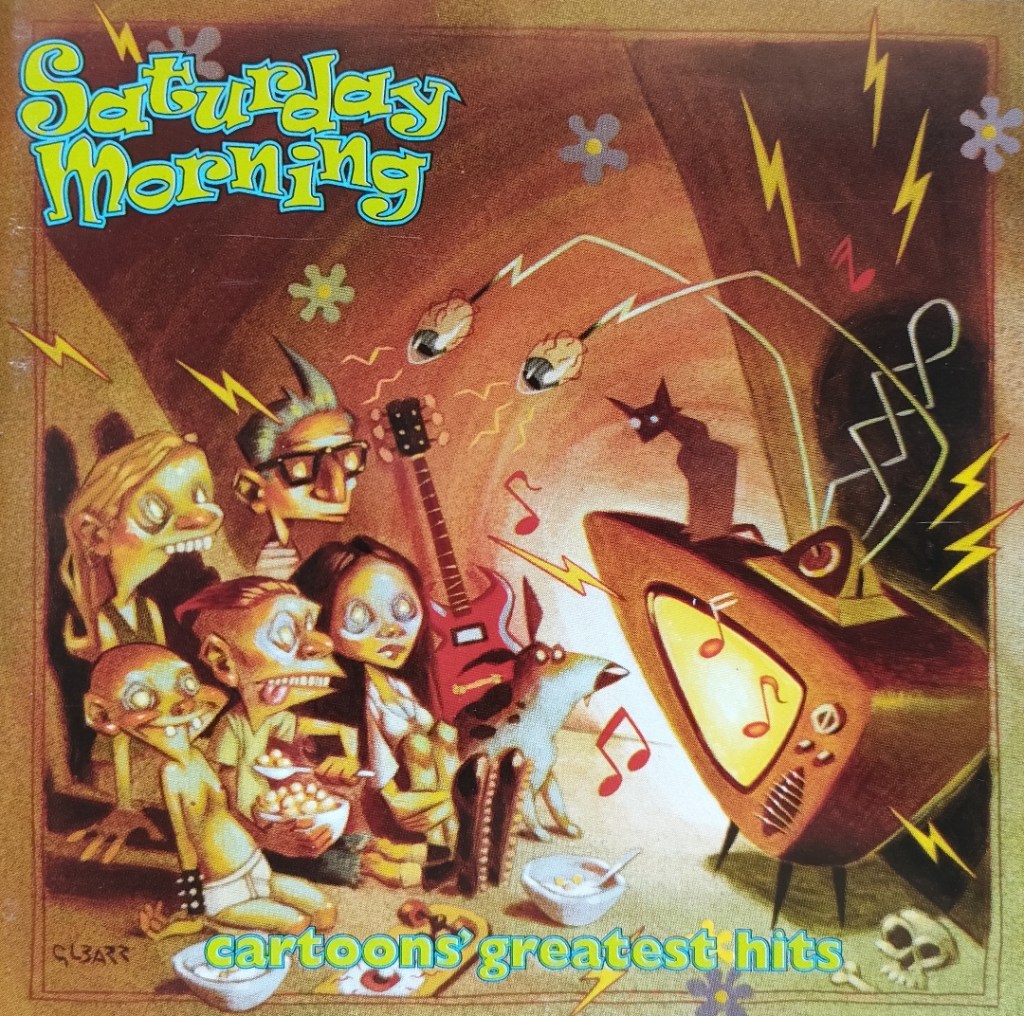
There’s a great record called ‘Saturday Morning – Cartoons’ Greatest Hits’ featuring this way cool version of the Scooby Doo theme by power pop hero Matthew Sweet.
*do away with is another ‘away with’ phrasal verb that means ‘remove or put an end to something’. Don’t go thinking that phrasal verbs in English can or will ever be done away with!