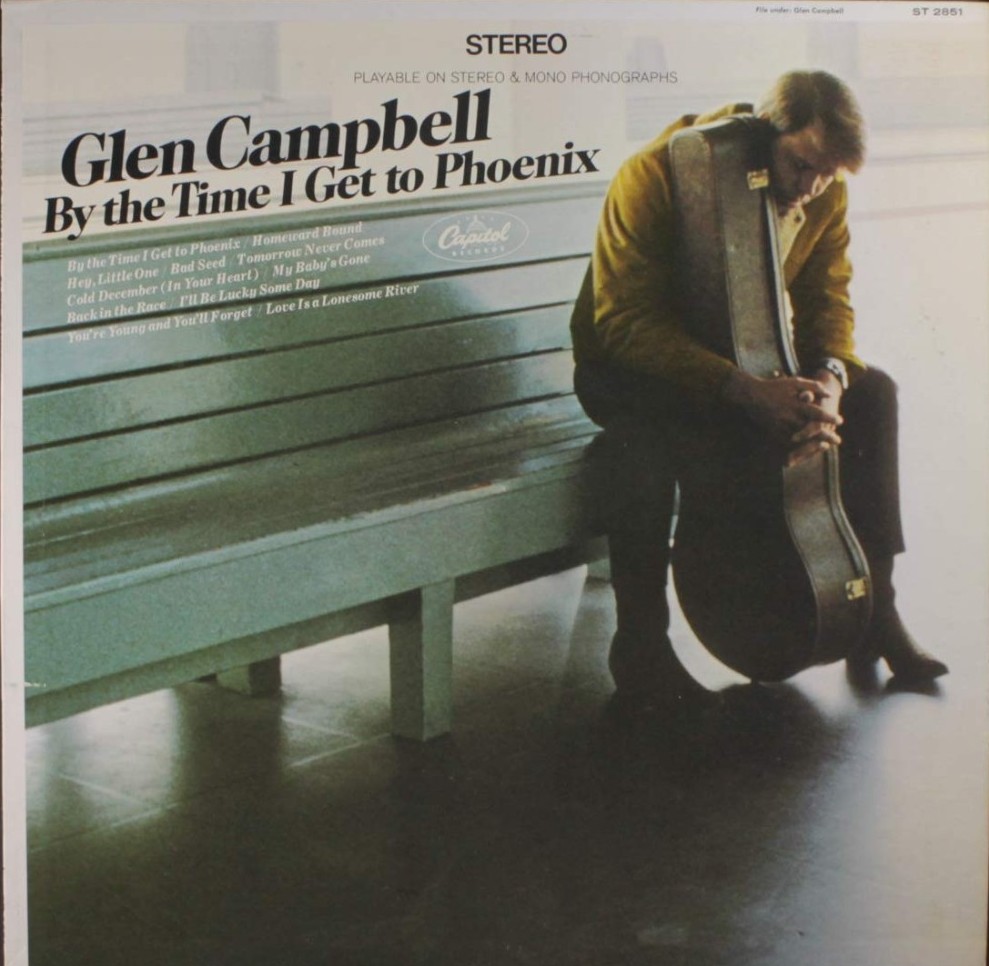
«By the time I get to Phoenix she’ll be rising
She’ll find the note I left hangin’ on her door
She’ll laugh when she reads the part that says I’m leavin’
‘Cause I’ve left that girl so many times before
By the time I make Albuquerque she’ll be working
She’ll prob’ly stop at lunch and give me a call
But she’ll just hear that phone keep on ringin’
Off the wall that’s all
By the time I make Oklahoma she’ll be sleepin’
She’ll turn softly and call my name out loud
And she’ll cry just to think I’d really leave her
Tho’ time and time I’ve tried to tell her so
She just didn’t know I would really go»
Utter* perfection. The genius songwriting of Jimmy Webb and a song that, for a while at least, Glen Campbell made his own. Three verses, 119 words and less than 3 minutes is all it takes to tell a story that, for me, has all the makings of** a fantastic road movie. Assuming you could maintain the perfectly paced unfolding drama of the song, that is.
I could go on and on about the song but I’d most likely bore you. So instead of that, I’ll try not to bore you by talking about verb tenses and prepositions.
Obviously, one of the most memorable things about the song is the progression of
«she’ll be rising»
«she’ll be working»
«she’ll be sleeping»
Perfect examples of the future continuous tense. Yay! There’s nothing complicated about this: action in progress at a particular time in the future – will + be + -ing. If only it were always this simple.
The use of the simple form in the second and third lines of each verse (She’ll find the note.. She’ll laugh..) could either be considered as prediction or future fact (will+infinite covers both). That depends on how the protagonist (and you!) feel about it.
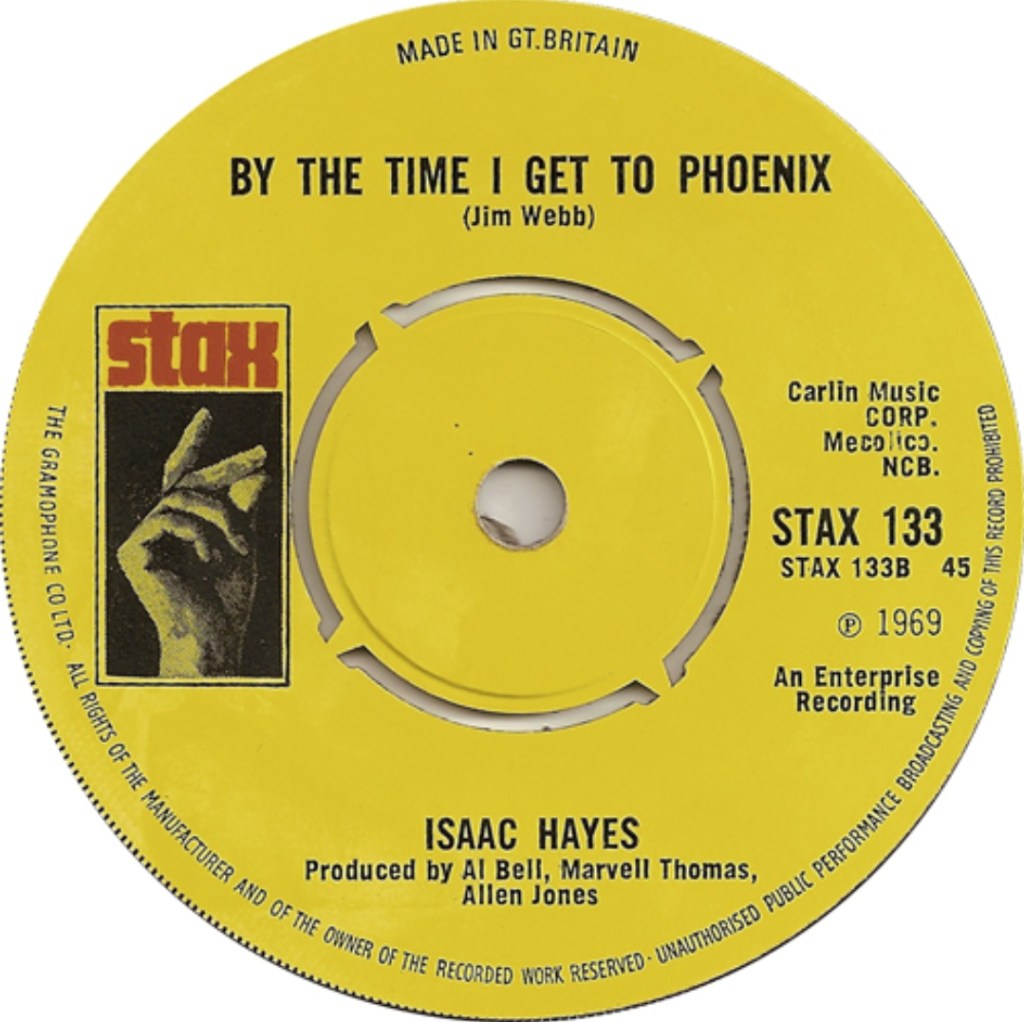
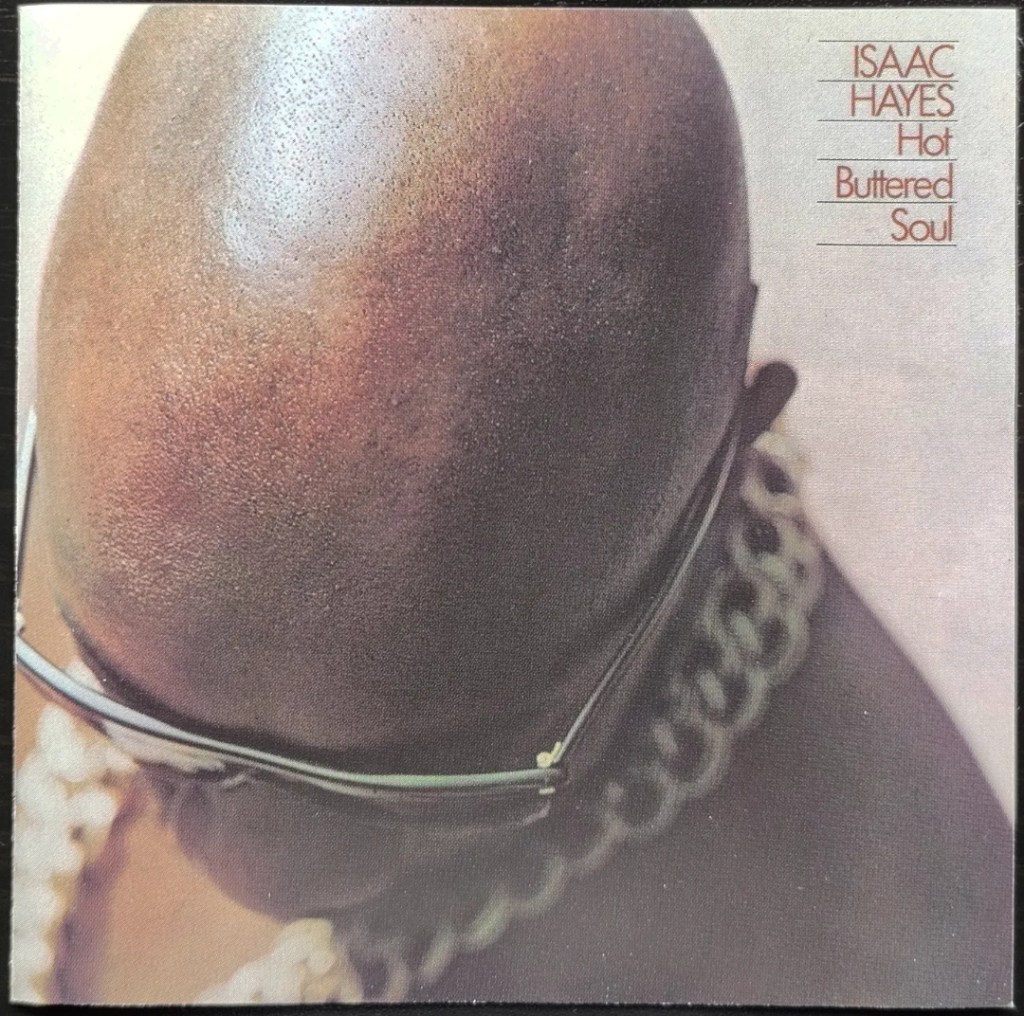
Before we move on to the preposition, here’s a 19-minute version of the song by Isaac Hayes. Wonderful in its own right, performed by one of the greatest soul singers of all time, featured on the classic LP ‘Hot Buttered Soul’, and, yeah, 19 minutes long. Rarely do songs prove*** to be so malleable. Glen Campbell’s 3 minutes of country pop are here stretched out into something totally different but equally fascinating.
The preposition ‘by’ can mean ‘at or before a particular time’. So it’s typically used when referring to deadlines. You might have to hand in an essay by Friday (Wednesday, Thursday or Friday at the latest) so it’s not the same as handing it in on Friday. Or you might order a vinyl edition of ‘Hot Buttered Soul’ at your favourite record shop Discos Alta Fidelidad here in Oviedo and they say you’ll have it by the end of the week.
You’ll also find this use of ‘by’ with the future perfect tense. (Perfect song, perfect tenses, perfect examples.. what more could you ask from this humble blog?) As you know, it’s will + have + past participle. As simple as that. By the time you get to the end of this sentence, you’ll have realised that it’s an example of the future perfect. The future perfect could be described as the past in the future, as we’re talking about completed actions, events etc. in a time that is ahead of us.
More than thirty years after the original song was written, it was brought back to life, so to speak****, by Peter Bruntnell in his utterly* brilliant and inspired take on the original title. The song deals with something totally different (the pseudoscience of cryonics) but for me has always also been about time rocketing past us, probably in part because I first heard it the year my daughter was born.
In a world that was even halfway to perfect, Peter Bruntnell would be massive. That’s not quite the case in this one though.***** What’s for sure is that he’s on that long line of genius musicians and songwriters that stretches way back into the past and will continue onwards into the future.
«Will generations after you hang onto their heads?
Or will they take another one instead?
Are we reaching Xanadu or is this more like hell?
I’m afraid what time will surely tell
By the time my head gets to Phoenix
You’ll be on your way to school
By the time my earlobe freezes
You’ll be acting like the fool
And if our world explodes and we never know the truth
Floating round this empty silver tube
Stories I have told you will soon become your own
Tell them to your children when they’re grown
And maybe in a year or two when they bring me back to life
You can introduce me to your wife»
* utter/utterly – absolute or to an extreme degree We use ‘utterly’ with ungradable adjectives (the ones that already mean ‘very something’): utterly amazing, brilliant, ridiculous…
** have (all) the makings of – This means that someone or something has what’s necessary to be or become a particular thing.
*** Inversion – If you begin a sentence with a negative or restricting adverb (never, rarely, not only..) what follows is essentially a question form, even though it’s not a question. This is done to give special emphasis and is sure to impress English teachers and examiners. e.g. Not only was it recorded by Glen Campbell, but also by Isaac Hayes.
**** so to speak – an idiomatic expression used to indicate that you’re describing something figuratively, not literally.
***** If you put ‘though’ at the end of a sentence it’s the same as putting ‘but’ or ‘however’ at the beginning.
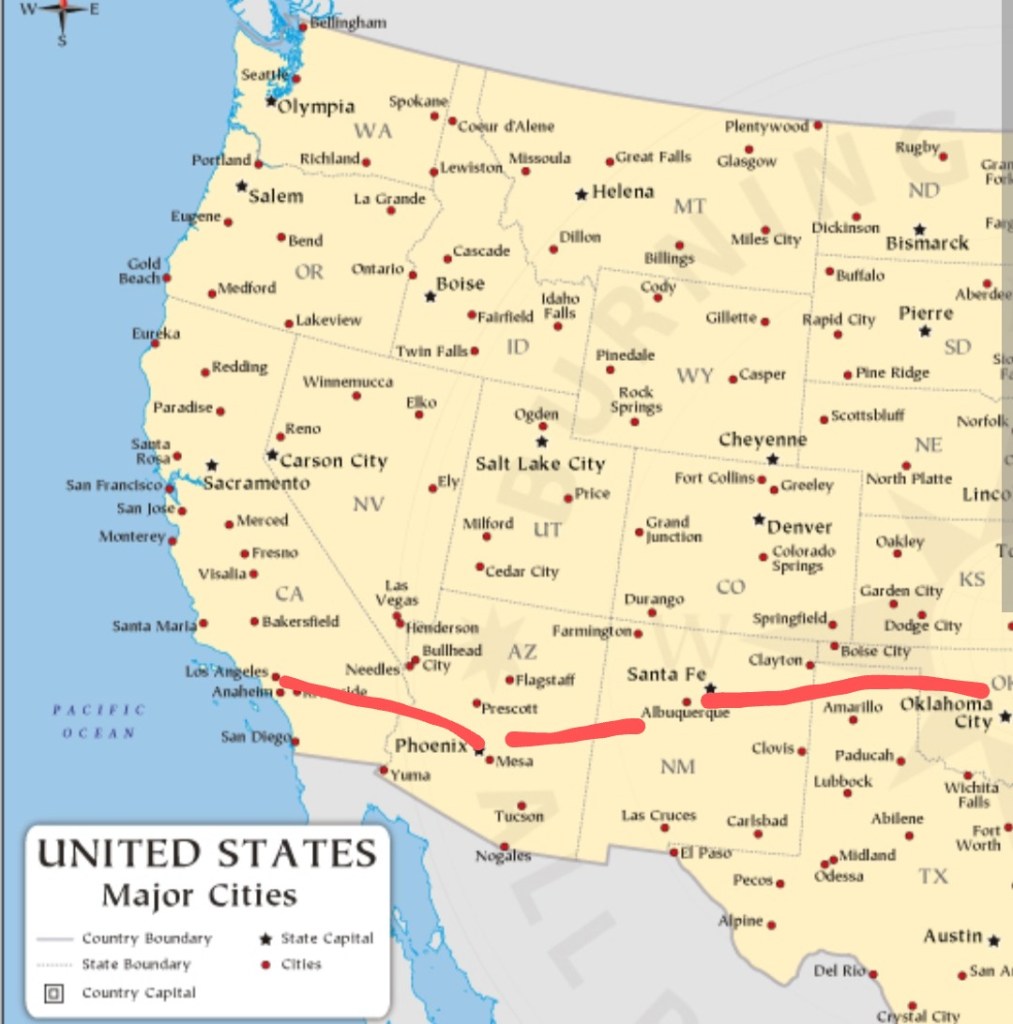
Incidentally, it would take about 20 hours to drive from L.A to Oklahoma via Phoenix and Albuquerque so the day of the events would have to be stretched out – kind of like what Isaac Hayes did with the original. But who cares about details like that anyway?
And what about that unmade road movie?


 Academia de Inglés Robin